
Exercise is one of the most powerful tools for improving long-term health, but more isn't always better. Understanding both the benefits and the risks can help you build a routine that keeps you safe while maximizing the payoff.
Disease Risk
Regular exercise has a positive effect on many of the body’s systems and can reduce the risk of chronic disease.
Regular exercise can:
- Decrease the risk of type II diabetes by improving insulin sensitivity.
- Reduce triglyceride levels and increase good (HDL) cholesterol levels.
- Reduce the risk of heart disease by lowering resting blood pressure.
Studies suggest that people who engage in moderate exercise 150 minutes per week are 20-40% less likely to suffer a cardiac event.
When paired with weight loss, regular exercise can also help lower total cholesterol and LDL (bad) cholesterol.
Muscles and Bones
Muscle mass naturally begins declining as early as one's 30s, with the rate of loss accelerating after age 50 or 60 — a process known as sarcopenia. This loss can slow metabolism over time. Strength training helps counter this by building and preserving muscle, which keeps metabolic rate higher than it would otherwise be.
Weight-bearing activities such as jogging, tennis, and strength training also stimulate bone growth, helping to reduce the risk of fractures later in life.
Mental Wellbeing
Both cardiovascular exercise and resistance training have been shown to help protect against depression, with research suggesting the two approaches are equally effective. Cardio in particular is also associated with reduced anxiety. Beyond mood, regular exercise can improve stress management and sleep quality.
Moderate vs. Vigorous
Public health guidelines generally recommend at least 150 minutes of moderate-intensity activity per week (for example, 30 minutes, five days a week) or at least 75 minutes of vigorous-intensity activity per week (for example, 25 minutes, three days a week). Moderate activities include brisk walking, recreational swimming, or casual cycling; vigorous activities include uphill cycling or running. A simple way to gauge exercise intensity is the "talk test" — if you can hold a conversation but not sing, you're at a moderate intensity; if you're too out of breath to talk, you've moved into vigorous territory.
How Much Is Too Much
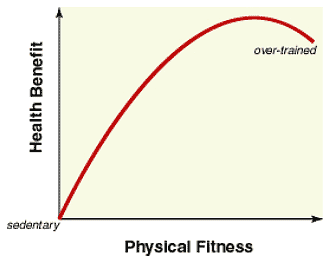
This isn't a reason to avoid more vigorous exercise — it's a reason to start at a level that matches your current fitness and build from there. So-called "weekend warriors," who jump into intense activity without a base level of conditioning, face a notably higher risk of injury. That said, don't let fear of exercise-related risk keep you from starting: most heart attacks occur while a person is at rest rather than during physical activity. Choosing activities that fit your fitness level and building up gradually lets you capture the benefits of exercise while minimizing the risks.


 5 Ways to Burn 300 Calories this Weekend
 The Best Home and Garden Chores for Burning Calories
 5 Tips for Making Exercise a Habit
 Best Ways to Stay Safe during Exercise in Hot Weather
 11 Tips for Exercise Motivation
 Signs You Need to Increase Exercise Intensity
 Essential Gear for Starting an Exercise Program
 Burn Calories in 10 Minutes

 Pinterest
 RSS Feed